

Sewage sludge drying in Slovenia – Modern Container Belt Drying System successfully commissioned
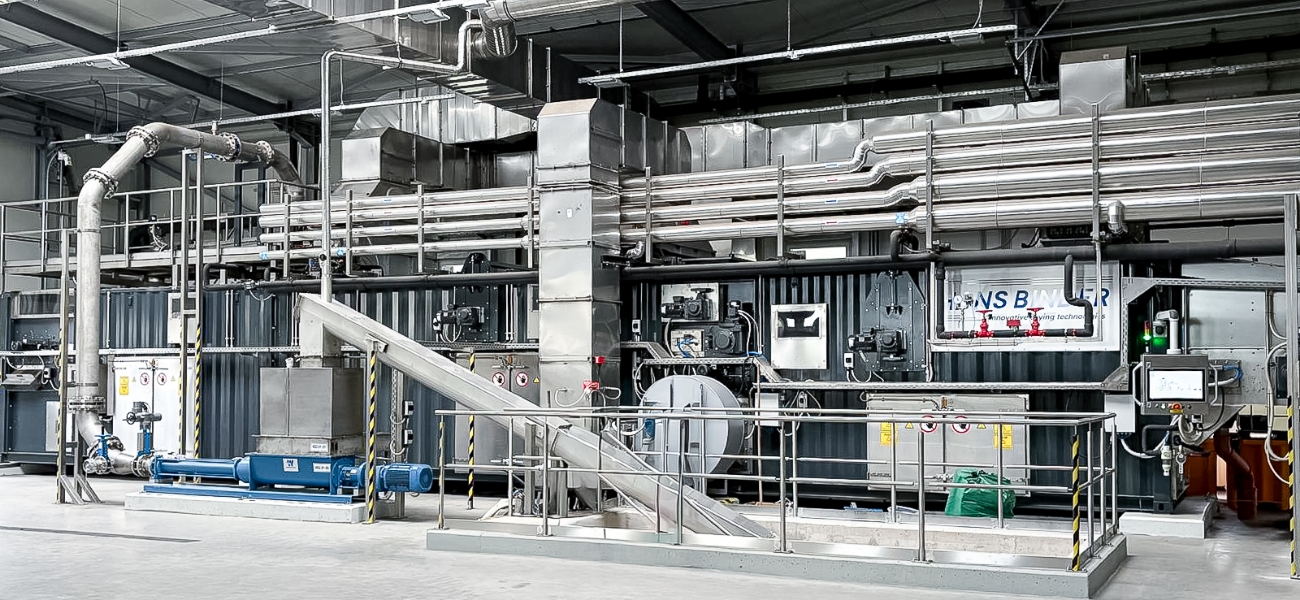
In March and April 2026, a modern Container Belt Drying System for sewage sludge was successfully commissioned in Domžale, near Ljubljana, Slovenia.
The compact yet high-performance system combines energy-efficient drying technology with an innovative heat recovery system and an integrated biomass filter.
With a daily throughput of 22 tonnes and a water evaporation capacity of 800 kg per hour, the system sets new standards in the field of thermal sewage sludge drying.
A particular highlight is the newly developed heat recovery system, which achieves significantly higher energy efficiency through precise airflow management and intelligent energy recovery.
Modern sewage sludge drying with a Container Belt Dryer
The requirements for sewage sludge treatment and drying are continuously increasing across Europe. Municipalities and industrial companies are increasingly looking for energy-efficient solutions to reduce disposal costs while operating more sustainably.
The Container Belt Drying System installed in Domžale was specifically developed for compact, flexible, and economical sewage sludge drying.
Advantages of Container Belt Dryers
- Compact design
- Fast installation
- Modular expansion
- Energy-efficient operation
- Reduced transport and disposal costs
- Flexible integration into existing plants
Containerized drying systems are becoming increasingly important, particularly for municipal wastewater treatment plants.
Performance data of the Domžale plant
The new belt drying plant achieves the following performance figures:
| Technical specification | Value |
|---|---|
| Throughput | 22 t/da |
| Water evaporation | 800 kg/h |
| Location | Domžale near Ljubljana |
| Commissioning | March / April 2026 |
| Filter system | Biomass filter |
| Drying system | Container Belt Dryer |
Innovative heat recovery for maximum energy efficiency
One of the key features of the system is its newly developed heat recovery system.
Thanks to precise airflow management and intelligent heat recovery technology, a significant proportion of the energy used can be recovered and reused. As a result, the overall energy consumption of the system is significantly reduced.
Why heat recovery is essential for sewage sludge drying
The thermal drying of sewage sludge is one of the most energy-intensive processes in modern wastewater treatment plants. Efficient heat recovery systems are therefore a key factor in improving both economic efficiency and sustainability.
Modern belt dryers offer:
- Lower energy consumption
- Reduced operating costs
- Improved process stability
- Reduced CO₂ emissions
- Better utilization of available heat sources
The Domžale plant demonstrates how modern drying technology can actively contribute to the energy transition.
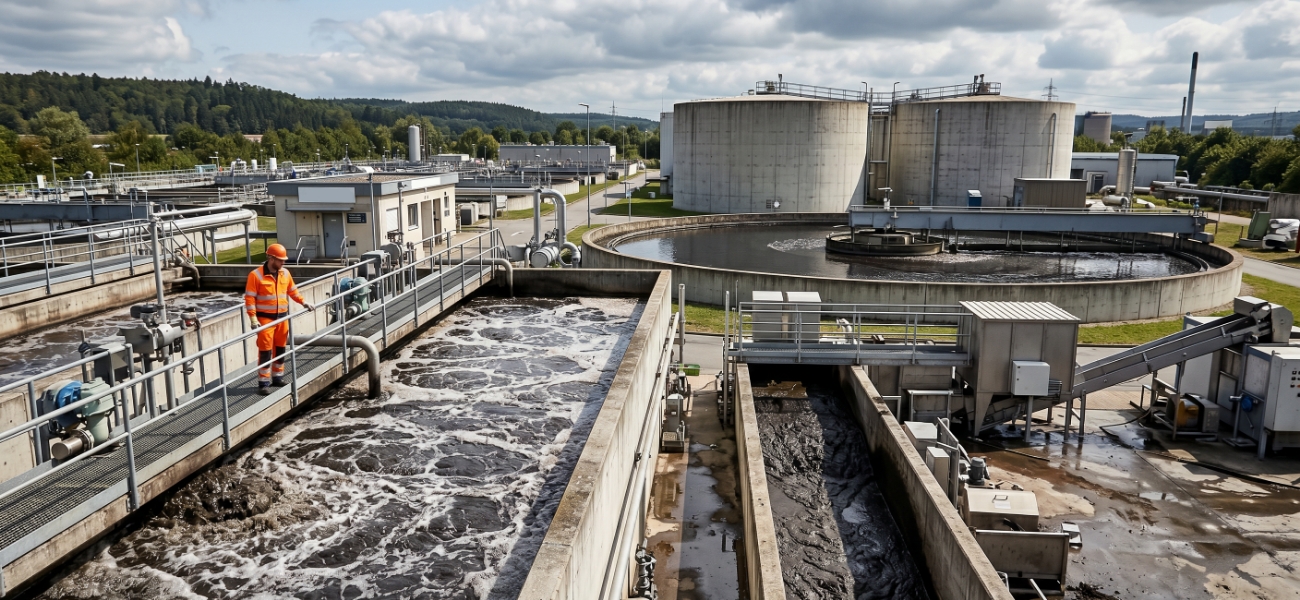
Wastewater treatment plant example
Biomass filter for sustainable exhaust air treatment
The system has also been equipped with a biomass filter, ensuring effective treatment of the process air and supporting environmentally friendly plant operation.
Especially in sewage sludge drying, controlled exhaust air treatment plays a crucial role. Modern filtration systems help reduce emissions and ensure reliable compliance with environmental regulations.
Why modern filtration systems are important
Extensive testing is essential before large industrial plants are commissioned. Only comprehensive testing can ensure that all systems operate reliably and that the plant can be run safely over the long term.
Particularly in large-scale belt dryers, precisely coordinated electrical systems are essential for stable, energy-efficient operation.
How does thermal sewage sludge drying work?
During thermal sewage sludge drying, moisture is deliberately removed from dewatered sludge. The objective is to significantly reduce its volume while increasing the material’s calorific value.
Modern belt dryers operate continuously:
- The sewage sludge is evenly distributed onto the drying belt.
- Heated process air flows through the material in a controlled manner.
- Moisture evaporates from the product.
- Heat recovery systems capture and reuse the thermal energy.
This process can significantly reduce transportation, storage, and disposal costs.
Why sewage sludge drying is becoming increasingly important
Rising energy costs, stricter environmental regulations, and increasing requirements for sewage sludge recovery are making modern drying systems more important than ever.
The benefits include:
- Reduced sludge volume
- Lower disposal costs
- Improved storage stability
- Possibility of energy recovery
- More sustainable wastewater treatment processes
As a result, energy-efficient belt dryers are becoming increasingly important worldwide.
Sewage sludge as a source of energy and valuable resources
In many cases, dried sewage sludge can be used for energy recovery. This creates additional opportunities for energy generation and resource utilization.
Modern sewage sludge drying systems therefore contribute not only to waste management but also to sustainable energy and environmental technologies.
The Domžale project – A step towards sustainable energy and environmental technology
With the successful commissioning of the Container Belt Drying System in Domžale, another forward-looking project in the field of energy-efficient sewage sludge drying has been successfully implemented.
The combination of:
- Modern belt drying technology
- Innovative heat recovery
- Intelligent airflow management
- Sustainable exhaust air treatment
demonstrates how modern environmental technology can successfully combine economic efficiency with sustainability.
The system has therefore been designed for long-term, efficient, and resource-conserving operation.
Conclusion
The new Container Belt Drying System in Domžale demonstrates how modern sewage sludge drying can be implemented today: energy-efficient, sustainable, and technically advanced.
With its innovative heat recovery, precise airflow management, and high-performance belt drying technology, the system sets new standards in thermal sewage sludge drying while making an important contribution to the energy transition.

Frequently asked questions about sewage sludge drying
A sewage sludge dryer reduces the water content of dewatered sludge through thermal drying.
Drying reduces the sludge’s volume and weight, lowers disposal costs, and improves its suitability for further utilization.
Belt dryers operate continuously, are energy-efficient, and are particularly suitable for high throughput capacities.
Heat recovery reduces energy consumption and improves the overall economic efficiency of the drying system.
A biomass filter cleans the exhaust air and helps reduce odors and emissions.

